

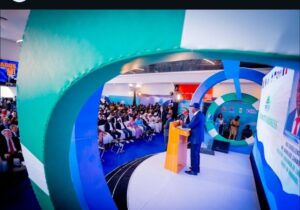
Today marks a major milestone in our mission to reshape transportation in Lagos with the official launch of the OMI-EKO Project. This initiative reaffirms our commitment to building a cleaner, safer, and more efficient city—one where our waterways become a vital part of everyday mobility and economic opportunity.
For too long, Lagos—a city surrounded by water—has relied heavily on road transportation, leading to chronic congestion and inefficiencies. The OMI-EKO Project aims to shift this narrative by unlocking the vast potential of water transport through strategic infrastructure and sustainable operations.
The project is anchored on two major pillars:
1. Infrastructure Development:
We are constructing modern inland waterways infrastructure, which includes 15 priority ferry routes, the dredging and navigation marking of 140 kilometers of waterways, and the development of 25 ferry terminals and jetties. These terminals will feature electric charging points, maintenance depots, and integrated road connections to ensure seamless movement across transport modes.
2. Sustainable Operations:
The initiative will introduce over 75 electric-powered ferries, supported by intelligent transport systems for ticketing and real-time passenger information. Additionally, we are strengthening the institutional capacity of the Lagos State Waterways Authority (LASWA) to ensure efficient and safe operations.
Through OMI-EKO, we aim to provide Lagosians with more reliable transport choices, reduce pressure on our roads, and promote inclusive economic growth across the state.
We extend our sincere appreciation to our international partners—the French Development Agency (AFD), the European Union, and the European Investment Bank—for their vital support in bringing this visionary project to life.
With OMI-EKO, we’re turning our waterways into highways of opportunity for all.
About the Author