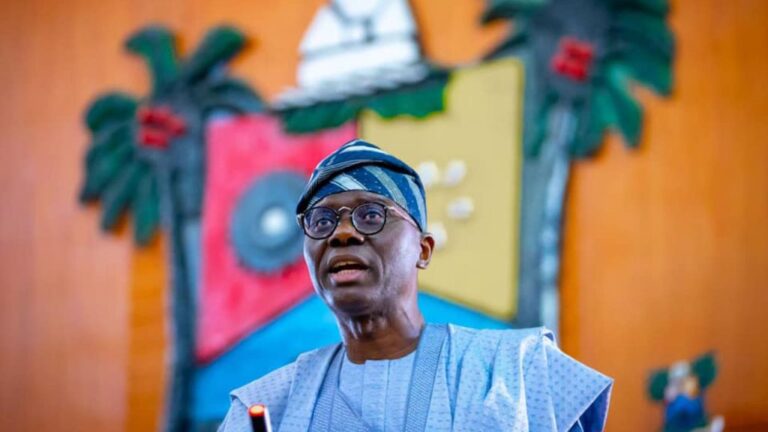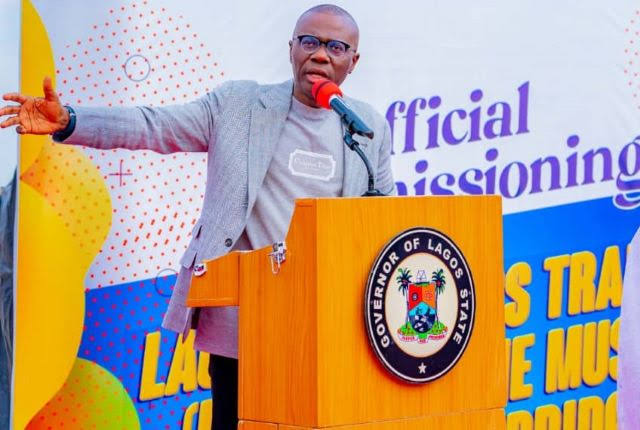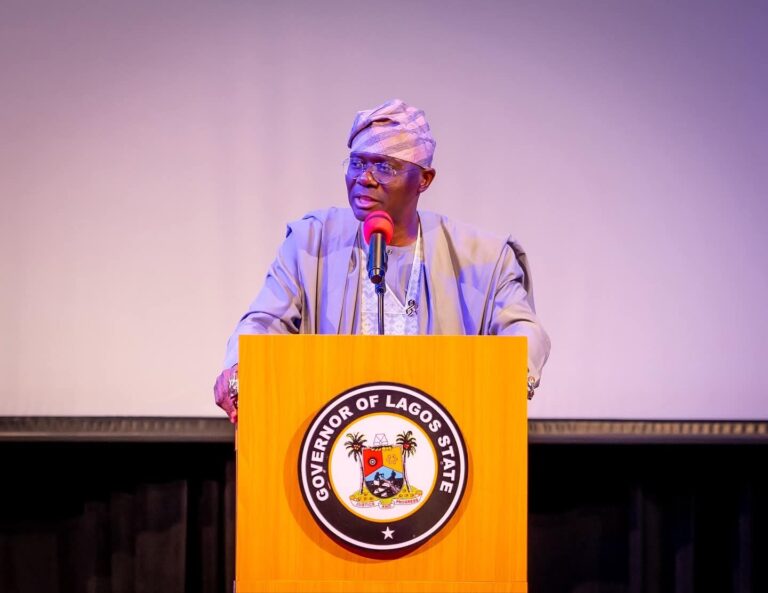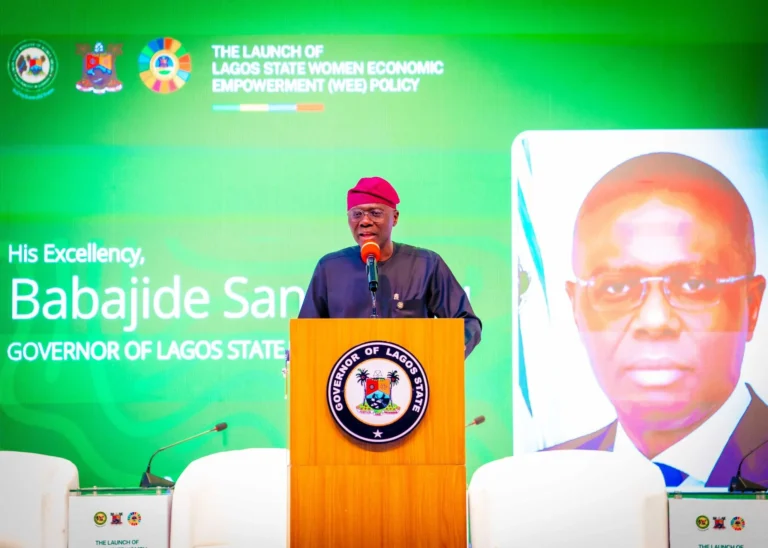
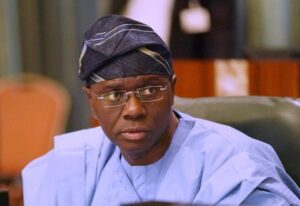
Lagos — Babajide Sanwo‑Olu, Governor of Lagos State, has launched a sweeping climate-policy push aimed at both environmental sustainability and investment attraction, positioning Lagos as a leading green-finance hub in Africa.
At a press briefing held at the state Secretariat in Alausa, the governor announced the new strategy centred on the so-called “80 Million Credit Float Project” — designed to issue 80 million eco-loans, create over 35 million green jobs and generate more than US$1 billion in revenue over 15 years via carbon-credits trading and sustainable infrastructure investments. 
“As Africa’s fastest-growing coastal megacity, Lagos must lead the way in climate-smart growth. We are laying the groundwork for sustainability, economic resilience and real investment opportunities,” Governor Sanwo-Olu said, noting that the initiative is aligned with the state’s THEMES+ development agenda. 
Key features of the policy include the launch of the state’s first-ever sub-national carbon exchange, the Lagos Carbon Exchange (LCX), which will enable monetisation of emissions reductions and reinvestment into clean energy, transport, healthcare and coastal-resilience projects. 
The programme also incorporates:
• Free distribution of six million clean cookstoves to households beginning June 2025, starting in the Makoko area, to reduce reliance on firewood and kerosene. 
• A “Pay-to-Cook” incentive scheme allocating about ₦10,000 annually to households that adopt clean-cooking technologies. 
• Allocation of ₦1 billion annually to each of Lagos’ 57 local government councils for community-based green-development projects, including tree-planting (400 million trees), renewable-energy access for small businesses, and health-insurance coverage for low-income families. 
Investment experts say the strategy offers multiple entry points for private-sector capital, including carbon-credit trade, clean-energy systems, waste-to-energy plants and blue-economy infrastructure. Indeed, Sanwo-Olu reiterated Lagos’ ambition to host large-scale blended-finance deals and public-private partnerships to tackle climate risk and drive growth. 
However, officials acknowledge that the state faces major challenges, including raising the necessary funding, building strong governance mechanisms and delivering measurable climate results in a short timeframe. In his remarks, the Commissioner for Economic Planning & Budget, Ope George, stressed the need for rigorous monitoring and stakeholder collaboration to make the vision a reality. 
As the launch concludes, Lagos is now actively inviting global investors, climate-fund managers, development banks and impact-finance firms to engage in the new policy framework. The governor concluded: “What we implement here in Lagos will not just be a Nigerian story – it will be an African and global success story of how cities seize climate opportunity for growth.”
About the Author