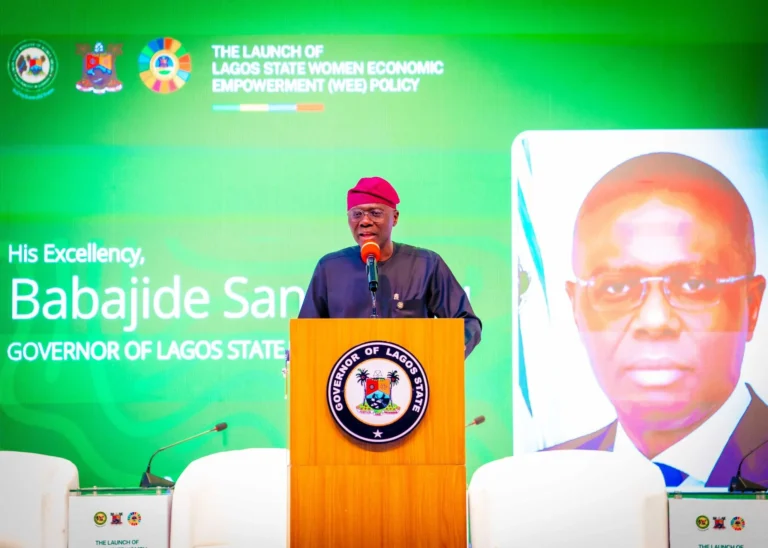




 Lagos State Governor, Babajide Olusola Sanwo-Olu, has reiterated his administration’s dedication to strengthening national food security through the adoption of innovative practices and sustained collaboration with private-sector stakeholders. The governor made this commitment while addressing participants at the Lagos Agrinnovation Summit 2.0, an event themed “Thriving Systems for a Smarter Future.”
Speaking at the summit, Governor Sanwo-Olu emphasized that Lagos, despite its limited landmass, continues to play a critical role in Nigeria’s agricultural value chain. He noted that the state government is intentionally investing in modern agricultural systems that promote efficiency, resilience, and sustainability. According to him, leveraging technology and innovation is no longer optional but essential for ensuring that Lagos and the country at large can meet the growing demand for food.
The governor highlighted the importance of private-sector participation, describing it as a major driver of food sufficiency and economic growth. He acknowledged the contributions of agritech startups, research institutions, investors, and commercial agricultural enterprises that are partnering with the government to transform the sector. These partnerships, he said, are helping to scale up production, reduce post-harvest losses, and create opportunities for youth involvement in agriculture.
Sanwo-Olu also commended the organizers of the Agrinnovation Summit for providing a platform where key players across the agricultural ecosystem can exchange ideas, showcase emerging solutions, and build networks that support long-term development. He reaffirmed the state’s readiness to create an enabling environment that encourages innovation—from improved farming techniques and mechanization to the deployment of digital tools for monitoring, processing, and distribution.
Expressing optimism about the future, the governor stated that Lagos is well positioned to contribute significantly to Nigeria’s broader food security agenda. He assured residents that his administration will continue to push policies and programs that make food production more efficient, affordable, and sustainable for all
About the Author