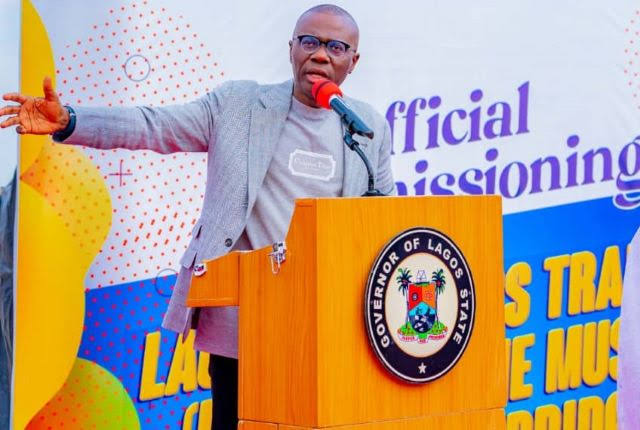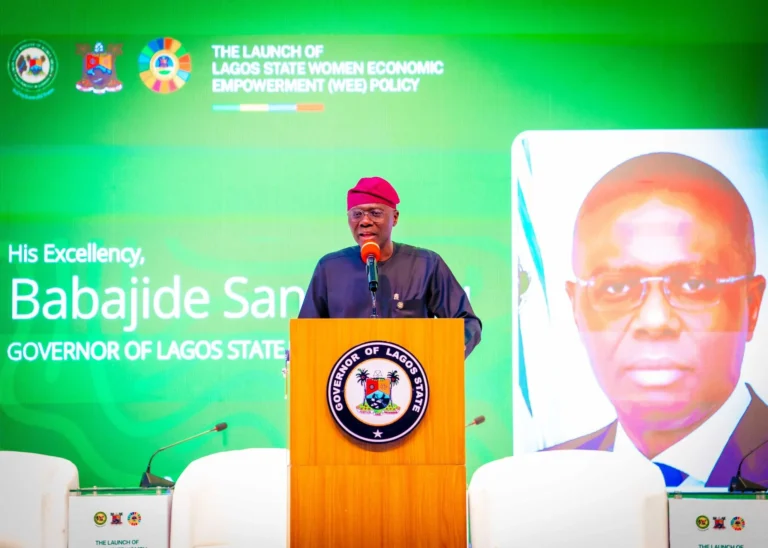





Lagos State Governor Babajide Sanwo-Olu has unveiled a series of transformative reforms designed to fortify the state’s HIV response system and protect it from future disruptions. The governor made the announcement on Tuesday during the 2025 World AIDS Day commemoration held at the Civic Centre in Victoria Island, Lagos.
Addressing stakeholders, development partners, health professionals, and affected communities, Sanwo-Olu reflected on the difficult period earlier in the year when the United States Government issued a Stop Work Order. The directive, which temporarily halted community-based HIV services across Nigeria, triggered widespread concern and created significant gaps in service delivery, particularly for those who rely heavily on continuous care.
Sanwo-Olu described the impact of the disruption as both “severe and deeply personal” for thousands of Lagos residents who depend on uninterrupted HIV treatment, prevention, and support services. He noted that the incident exposed vulnerabilities within the state’s health system and underscored the need for a more resilient, locally driven HIV response capable of withstanding external shocks.
In response, the governor announced sweeping reforms focusing on strengthening domestic health financing, expanding community-level interventions, and improving data-driven planning. He emphasized that the state is committed to reducing dependency on foreign-funded programs by enhancing local capacity, investing in infrastructure, and supporting civil society organizations that play critical roles in HIV outreach and advocacy.
Sanwo-Olu further highlighted the importance of collaboration, calling on the private sector, non-governmental organizations, and international partners to continue working with Lagos State to sustain the progress achieved over the years. He reiterated his administration’s determination to ensure that no resident living with HIV experiences treatment interruption, stigma, or discrimination.
The governor concluded by reaffirming Lagos State’s commitment to achieving global HIV targets and building a stronger, more inclusive health system that safeguards the well-being of all citizens
About the Author