

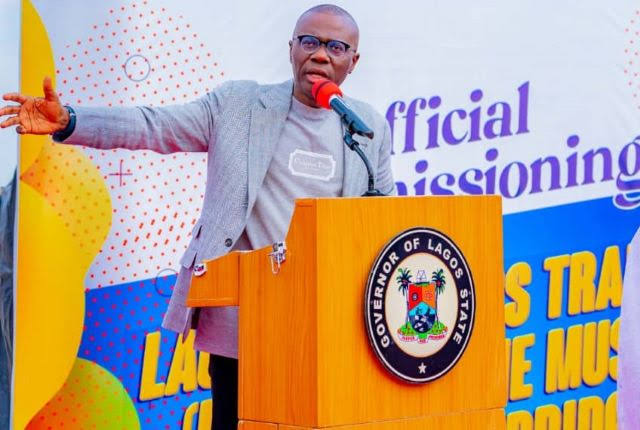
The Epe Youth Forum has commended Lagos State Governor Babajide Sanwo-Olu for demonstrating responsible and people-centred leadership following the approval and presentation of provisional allocation letters to traders affected by the redevelopment of Alaba Transnational Market, popularly known as Alaba Rago Market.
The initiative, which forms part of the Lagos State Government’s broader urban renewal agenda, saw 180 traders receive provisional allocation letters during an official ceremony held at the headquarters of the Lagos State Building Control Agency (LASBCA) in Ikeja. The allocation letters, personally approved by the governor, are aimed at ensuring that traders impacted by the reconstruction along the Lagos-Badagry Expressway are properly resettled and reintegrated into improved commercial facilities.
The redevelopment of Alaba Rago Market represents a key component of the administration’s vision to transform Lagos into a modern 21st-century economy while protecting the livelihoods of small and medium-scale business owners who depend on local markets for survival. Government officials explained that the project is designed to create a safer, cleaner, and more organised trading environment that aligns with global urban standards.
According to officials of the Lagos State Building Control Agency, the reconstruction will address longstanding issues including congestion, environmental sanitation challenges, and safety concerns along the busy Lagos-Badagry transport corridor. The upgraded market is expected to improve mobility for commuters while providing traders with structured spaces that enhance productivity and customer experience.
Speaking on the development, the Coordinator of the Epe Youth Forum, Adewale Adeosun, described the governor’s decision as a clear example of governance that balances development with compassion.
“Governor Sanwo-Olu has shown that urban renewal should not come at the expense of ordinary citizens. By ensuring that affected traders receive allocation letters and remain part of the new market structure, the government has demonstrated fairness and inclusiveness,” he said.
He further noted that markets remain critical drivers of grassroots economic activity across Lagos, adding that protecting traders during redevelopment projects strengthens economic stability within communities.
“Thousands of families depend on these businesses for their daily livelihood. Providing structured resettlement gives traders confidence that development projects are meant to improve their lives, not displace them,” Adeosun added.
Beneficiaries who received their letters expressed appreciation to the state government, describing the gesture as reassurance that their businesses would continue to thrive within a more secure and organised commercial environment. Many traders noted that the transparent allocation process reinforced trust between the government and market stakeholders.
The Lagos State Government reiterated that the Alaba Rago redevelopment is part of a wider strategy to modernise public markets, attract investment, and promote orderly commercial growth across the state. By improving infrastructure while safeguarding economic participation, the administration aims to create business-friendly communities capable of supporting Lagos’ expanding population.
Observers note that initiatives like this reflect the Sanwo-Olu administration’s broader commitment to inclusive development, ensuring that infrastructure expansion goes hand-in-hand with social protection and economic opportunity.
As work progresses on the market reconstruction, stakeholders have expressed optimism that the project will not only enhance environmental standards but also stimulate commerce along the Lagos-Badagry axis, benefiting traders, commuters, and surrounding communities alike.
About the Author