


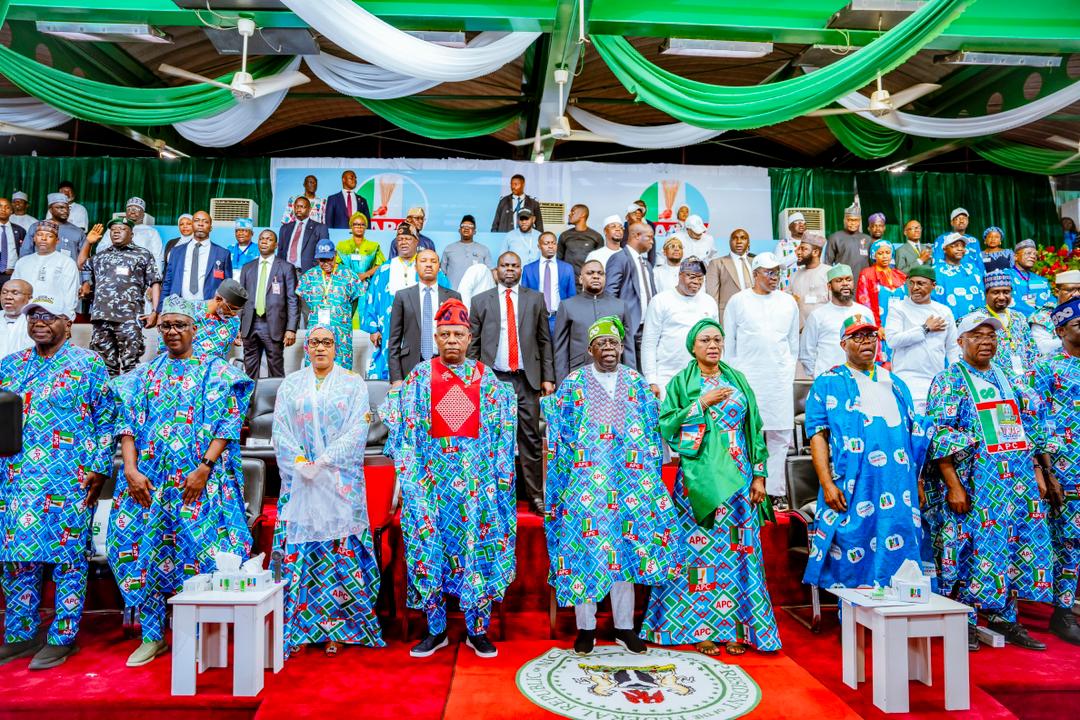
The Campaign for Dignity Governance has commended the successful hosting of the recent National Convention of the All Progressives Congress, describing the event as a defining moment in reinforcing party unity, strengthening democratic structures, and repositioning the party for more effective governance.
In a comprehensive statement issued in Lagos following a strategic leadership session, the Convener of the group, Razaq Olokoba, noted that the convention stood out not only for its organisation and peaceful conduct but also for the emergence of a well-balanced and experienced National Working Committee (NWC), which he described as critical to sustaining the party’s administrative strength and internal cohesion.
According to Olokoba, national conventions play a central role in shaping the direction of political parties, serving as platforms for consensus-building, leadership renewal, and strategic alignment.
“What we witnessed at the APC National Convention was a clear demonstration of political maturity and institutional discipline. It reflects a party that understands the importance of structure, leadership continuity, and collective responsibility in sustaining democratic governance,” he stated.
A major highlight of the convention was the constitution of a new National Working Committee, comprising individuals drawn from diverse professional and political backgrounds, with the mandate to strengthen party administration and ensure effective coordination across all levels.
The newly constituted NWC includes:
- National Chairman – Prof. Nentawe Yilwatda
- Deputy National Chairman (North) – Ali Bukar Dalori
- Deputy National Chairman (South) – Dr. Benjamin Obi Nwoye
- National Secretary – Sen. Surajudeen Ajibola Basiru
- Deputy National Secretary – Prof. AbdulKarim Abubakar Kana
- National Legal Adviser – Murtala Aliyu Kankia
- National Treasurer – Uguru Mathew Ofoke
- National Financial Secretary – Amb. Haruna Ginsau
- National Organising Secretary – Muhammad Sulaiman Argungu
- National Welfare Secretary – Donatus Enyinnah Nwankpa
- National Publicity Secretary – Felix Morka
- National Auditor – Sen. Abubakar Maikafi
- National Women Leader – Dr. Mary A. Idele
- National Youth Leader – Dayo Israel
- National Leader (Persons with Disabilities) – Aare Durotolu Oyebode Bankole
- Deputy National Financial Secretary – Hammam Adamu Ali Kumo
- Deputy National Organising Secretary – Barr. Emeka Okafor
- Deputy National Women Leader – Zainab Abubakar Ibrahim
- Deputy National Publicity Secretary – Hon. Meseko Durosinmi Josiah
- Deputy National Welfare Secretary – Dr. Christopher Michael Akpan
- Deputy National Auditor – Mr. Olugbenga Olayemi
- Deputy National Legal Adviser – Barr. Ibrahim Salawu
- Deputy National Treasurer – Engr. Ben Akak
- Deputy National Youth Leader – Jamaludeen Kabiru
- National Ex-Officio (North Central) – Dr. Opawoye Oluwatoyin Bunmi
- National Ex-Officio (North East) – Adamu Jallah
- National Ex-Officio (North West) – Kano Muhammed Jamu Yusuf
- National Ex-Officio (South East) – Hon. Ikechukwu Umeh
- National Ex-Officio (South South) – Mr. Francis Kolokolo
- National Ex-Officio (South West) – Hon. Bunmi Orinowo
The Campaign for Dignity Governance described the composition of the NWC as reflective of inclusiveness, experience, and strategic balance, noting that such a structure is essential for managing the complexities of a national political party.
Olokoba particularly highlighted the importance of administrative efficiency within party leadership, stating that the role of the National Working Committee goes beyond coordination, it is central to maintaining discipline, ensuring policy alignment, and sustaining communication between the party and its members.
“The strength of any political party lies in its leadership structure. With a well-composed National Working Committee, the APC is better positioned to consolidate its gains, strengthen internal cohesion, and deliver on its governance mandate,” he added.
The group further observed that the peaceful conduct of the convention sends a strong message about political stability in Nigeria, especially in a democratic environment where internal disputes often disrupt party operations.
It noted that the ability of the party to manage leadership transitions effectively and maintain unity among its members is a positive indicator of institutional growth.
Beyond party politics, the Campaign for Dignity Governance emphasised that a stable and well-organised ruling party contributes significantly to national development. It stated that when party structures are strong, governance becomes more coordinated, policies are better implemented, and political distractions are minimised.
The group also called on the newly inaugurated National Working Committee to prioritise inclusiveness, transparency, and grassroots engagement in the discharge of their responsibilities. It urged them to ensure that the decisions taken at the national level reflect the aspirations of party members and Nigerians at large.
Furthermore, Olokoba stressed the importance of translating the outcomes of the convention into tangible benefits for citizens, noting that the ultimate measure of political success lies in improved governance and service delivery.
“Political processes must ultimately lead to better outcomes for the people. Nigerians expect leadership that delivers, and it is important that the energy and unity demonstrated at the convention are reflected in governance,” he said.
The Campaign for Dignity Governance concluded by reaffirming its support for democratic processes that promote accountability, inclusiveness, and continuity, noting that these principles remain essential for building a stable, progressive, and prosperous Nigeria.
About the Author