

By Campaign for Dignity in Governance
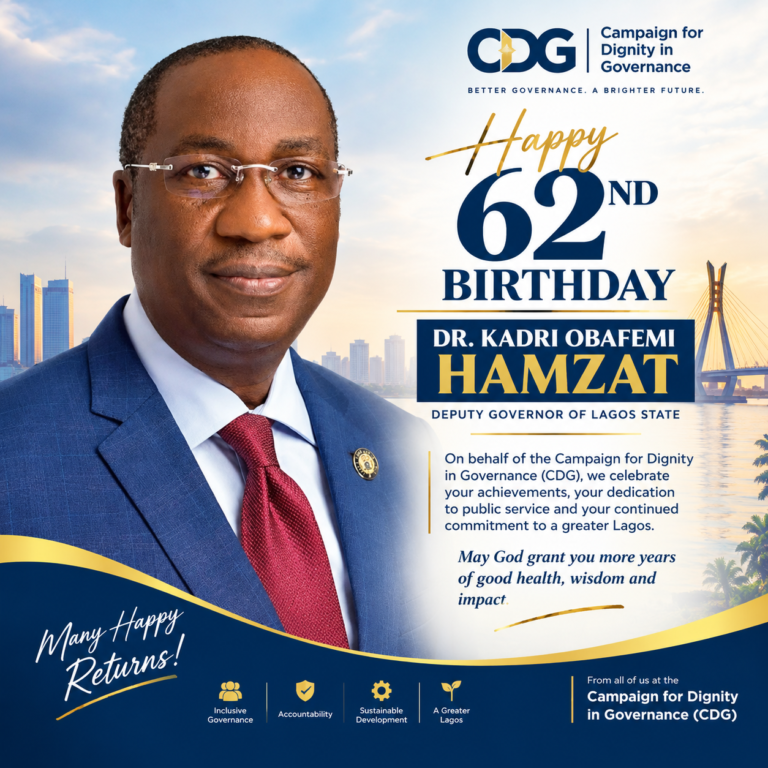
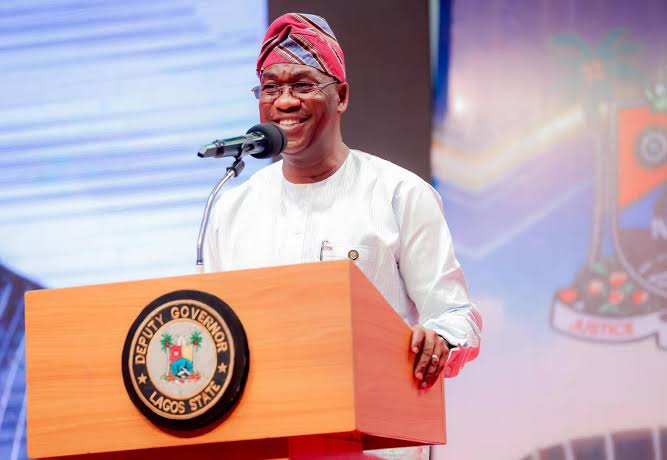
Lagos State governorship candidate of the All Progressives Congress (APC), Dr. Kadri Obafemi Hamzat, has unveiled key components of his manifesto for Lagos at The Platform Nigeria Town Hall, outlining proposed measures on child welfare, transportation, housing, business regulation, waste management, healthcare, education, environmental protection and accountability.
Speaking during the Independence Day edition of The Platform, Hamzat presented what he described as “The Promise: Building a State That Lasts”, a manifesto containing 100 pledges which, according to him, residents would be able to monitor, track and measure.
One of the major proposals he announced was the creation of a dedicated Child Welfare Administration Agency, which he said would be pursued within his first 100 days in office.
Hamzat said the proposed agency would focus specifically on the welfare of children and ensure that children are either in school or learning a trade rather than roaming the streets.
The proposal was presented as part of a broader approach to child welfare and social development, with the agency expected to provide a dedicated institutional structure for addressing issues affecting children in Lagos.
A LAGOS WHERE COMMUTING TIME IS PREDICTABLE
Transportation was another major part of Hamzat’s presentation.
He said his vision is for Lagos residents to spend less time travelling from their homes to their places of work or business.
According to him, residents should be able to leave their homes with a reasonable expectation of how long it will take to reach their destinations.
“My vision is if you live in Agege or you live in Ajegunle or you live in Ajah or in Igando, the time it takes you from your home to your work or where you ply your trade, I guarantee that it is going to be shorter than it is today,” he said.
The proposal places commuting time and predictability at the centre of his transportation vision, alongside ongoing and proposed investments in roads, rail and other forms of mass transit.
“ANY UNAUTHORISED LEVY MUST GO”
On the business environment, Hamzat promised to tackle what he described as unauthorised, untraceable and unnecessary levies imposed on businesses operating in Lagos.
He proposed the establishment of an Economic Council that would bring the state and local governments together to harmonise charges and create greater clarity for businesses.
His position was that businesses should know exactly what they are required to pay and should not face multiple or unexplained charges.
“What we will do is to make sure that any levy that is unauthorised, that is not known, that even we can’t track, must go,” Hamzat said.
The proposal is aimed at creating a more predictable environment for businesses, particularly small and informal enterprises.
HOUSING, FLOODING AND ENVIRONMENTAL MANAGEMENT
On housing, Hamzat said Lagos needs to build more homes and that his administration would also prioritise the completion of ongoing housing projects.
He also addressed the challenge of ocean surge, noting that while government cannot stop the movement of the ocean, it can take measures to control how its effects are felt by communities.
He also spoke about the need for stronger regulation of dredging activities as part of efforts to manage environmental risks.
On pollution, Hamzat linked the expansion of cleaner transportation options with efforts to reduce emissions from diesel-powered engines.
WASTE MANAGEMENT
Waste management also featured prominently in his presentation.
Hamzat outlined plans to expand waste transfer and loading infrastructure across Lagos, including facilities at Olusosun and Alimosho, as well as additional loading stations in other parts of the state.
He said the Olusosun and Alimosho facilities were expected to be completed in April, according to the timeline he presented.
The broader proposal is aimed at improving the movement and processing of waste across the state.
HEALTHCARE AND EDUCATION
Hamzat also used the debate to highlight changes in Lagos’ emergency response capacity over the years.
He noted that Lagos had no public ambulance service in 1999, while the state now has about 200 ambulances. He also referenced an increase in fire service capacity from 11 trucks in 1999 to 176.
The figures were presented by Hamzat as evidence of progress in public services while acknowledging that more work remains to be done. The Guardian also reported his reference to these figures during the town hall.
On education, Hamzat challenged the narrative that Nigeria’s education system produces poor outcomes, pointing to the continued recruitment of Nigerian-trained doctors, teachers and nurses by other countries.
His broader argument was that Lagos should continue investing in education while ensuring that the state’s human capital is equipped to compete internationally.
ACCOUNTABILITY THROUGH 100 TRACKABLE PLEDGES
Perhaps one of the notable features of the manifesto presentation was Hamzat’s emphasis on monitoring and accountability.
Under “The Promise: Building a State That Lasts,” he said the manifesto contains 100 specific pledges that residents should be able to follow.
The idea, as presented, is to allow citizens to monitor what was promised, track implementation and measure progress rather than leaving campaign commitments as broad statements.
His campaign’s published manifesto also identifies digital transformation, infrastructure, education and human capital development, healthcare, economic prosperity, and security and safety among its major policy areas.
The Platform provided an opportunity for Lagos governorship candidates to present their programmes and respond to questions on issues including housing, transportation, education, jobs, waste management and flood control.
Hamzat’s presentation therefore placed particular emphasis on institutional reforms, measurable commitments and continuity in governance.
For Lagos residents, the significance of the manifesto will ultimately depend on how clearly these proposals are defined, funded, implemented and measured if they become government policy.
As the 2027 election conversation develops, the publication of detailed commitments provides residents, civil society organisations, businesses and other stakeholders with material to examine, compare and monitor.
The Promise: Building a State That Lasts — 100 pledges, with a stated commitment that Lagosians can track the promises and measure the progress.
About the Author