

By Razaq Olokoba
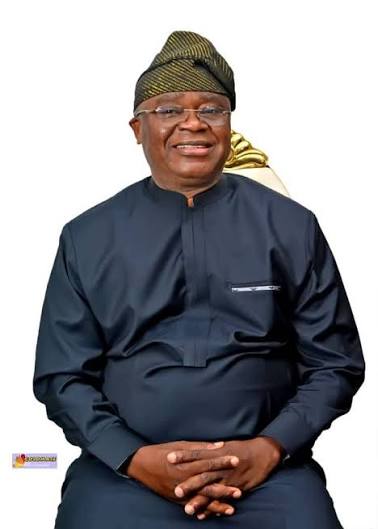
When President Bola Ahmed Tinubu appointed Dr. Kayode Opeifa to lead the Nigerian Railway Corporation, many Nigerians may have simply seen it as another government appointment. But as the work continues to unfold, it is becoming increasingly clear that the President made a decision worth applauding.
President Tinubu got it right with Opeifa.
Leadership appointments are important because the person placed at the top of an institution can determine whether policies remain on paper or become visible results. This is particularly true of an organisation as strategic as the Nigerian Railway Corporation.
For decades, Nigerians have understood the importance of an efficient railway system. We have also experienced the frustration that comes when railway infrastructure is poorly maintained, services are unreliable or an institution fails to meet the expectations of the people.
This is why the renewed attention being given to the NRC under Dr. Opeifa deserves recognition.
Opeifa’s responsibility is not a small one. The railway sits at the intersection of transportation, commerce, logistics, infrastructure and economic development. A functioning railway can move people, connect communities, support businesses and take significant pressure off Nigeria’s already overstretched road network.
More importantly, a strong railway system can help Nigeria move goods more efficiently.
Think about the farmer trying to get produce to the market, the manufacturer moving products between locations, the importer moving cargo from a port, or the ordinary Nigerian travelling between cities. Every improvement in transportation has the potential to make life easier and economic activity more efficient.
This is why the work of the NRC should not be viewed narrowly as simply about trains.
It is about the economy.
Under Dr. Opeifa, there has been renewed attention to the Corporation’s operations, infrastructure, passenger services and the wider role of rail in national development. The focus on improving the passenger experience, strengthening railway operations and ensuring that existing infrastructure receives proper attention is particularly important.
One thing Nigeria must learn is that development is not only about commissioning new projects. We must also maintain, protect and maximise the infrastructure we already have.
That is where responsible management matters.
The railway also has enormous potential in freight transportation. Nigeria cannot continue to put so much pressure on its highways when rail can provide an alternative for moving large volumes of goods.
A stronger freight network can support our ports, manufacturers, agricultural producers and distributors. It can reduce transportation pressure on our roads and potentially make the movement of goods more predictable and efficient.
There is also the issue of technology.
The modern passenger does not want to spend hours struggling to access basic information or services. Nigerians increasingly expect public institutions to embrace digital solutions, improve communication and make transactions more transparent.
The continued movement towards more modern railway operations is therefore a step in the right direction.
Of course, nobody should suggest that the challenges facing Nigeria’s railway system will disappear overnight. There are infrastructure gaps to address, maintenance requirements, security concerns, operational issues and the need for sustained investment.
But leadership is also about recognising what needs to change and beginning the process of changing it.
This is where Dr. Opeifa deserves encouragement.
He has an opportunity to help build an NRC that Nigerians can trust, passengers can depend on and businesses can confidently use.
And this brings us back to President Tinubu.
The President deserves praise for understanding that strategic institutions require people with the capacity to manage them. Government should not be about appointing people simply because positions are available. It should be about matching responsibility with competence.
That is what putting a round peg in a round hole means.
If an appointment produces a manager who understands the assignment, takes the institution seriously and begins to push it towards better performance, then the appointment deserves to be acknowledged.
Dr. Kayode Opeifa now has a major responsibility on his shoulders, and Nigerians will continue to watch and assess the Corporation’s performance. Praise should never replace accountability. In fact, the two should go together.
We should praise good work and demand even better work.
For the NRC, the goal should be clear: safer operations, reliable services, properly maintained infrastructure, stronger passenger confidence, efficient freight movement and a railway system capable of contributing substantially to Nigeria’s economic growth.
Nigeria needs its railway.
We need it for our commuters. We need it for our businesses. We need it for our farmers. We need it for our manufacturers. We need it for our ports. We need it for the next generation.
So, when someone appears to be making the right moves in an institution of such national importance, we should not hesitate to say so.
President Tinubu got it right with Opeifa.
The appointment has placed a capable hand at the helm of an institution that requires serious attention, strategic thinking and determined leadership.
The expectation now is simple: keep the trains moving, keep improving the system and keep delivering for Nigerians.
That is how public service earns public confidence.
And that is how a good appointment becomes a good decision.
About the Author